Conversations With God, Book One is one of those books that I enjoyed reading very much.
I haven't had so much joy out of a book for decades, until I came across this particular title.
The writer Neale Donald Walsch wrote this runaway bestseller in 1995. It stayed on the New York Times' Bestsellers List for 137 weeks. That's almost three years.
Since then, Walsch has published eight other books. The first one was easily the most satisfying for me. I found a lot of answers that I have been looking for in Book One.
The language is simple, the wisdom profound and the messages stirring. I guess in a way, God must have felt he came down to our level and tell us as it is. If you are one of those who like to skirt along the Milky Way searching for answers to life's most peculiar moments, this could be it.
Neal Donald Walsch has visited Malaysia back a couple of years. He's actually an ordinary person with extraordinary books to his name.
Sometimes when you grope for answers in the backalleys of a mundane existence, you will be surprised what you may find.
Conversations with God continues to impress those who are searching for solutions and pieces of jigsaw to the grand puzzle of their own lives.
When you read this book, expect nothing, hold no prejudices and open your mind to all possibilities. Perhaps then, the light will shine for you, too.
Good luck.
Monday, June 02, 2008

Saturday, May 17, 2008
Read Guideposts
I have had the immense pleasure of reading copies of Guideposts in certain crucial years of my life.
Guideposts is one of those Christian magazines that uplifts the spirits and bring cheer to lonely moments.
We all know about kind deeds and generous hearts but we soon forget all these in the rat race that more or less describes our daily lives.
Since we are mortals and frailty is part of the human package, we need to be reminded that there are many, many good people in this world.
And these people of performing fantastically good deeds quietly, in their own way, in their own time.
That we should follow their examples goes without saying but first, we need to have our hearts and souls re-energised so that we can live a full life.
Without the vitality that is part of kindness and love, our souls will wither and our hearts will harden. We need mercy, compassion and kindness in our lives just like plants need water and good nutrients in the ground to grow and thrive.
Feel free to read all that inspires you, and you can begin with Guideposts.
Guideposts is one of those Christian magazines that uplifts the spirits and bring cheer to lonely moments.
We all know about kind deeds and generous hearts but we soon forget all these in the rat race that more or less describes our daily lives.
Since we are mortals and frailty is part of the human package, we need to be reminded that there are many, many good people in this world.
And these people of performing fantastically good deeds quietly, in their own way, in their own time.
That we should follow their examples goes without saying but first, we need to have our hearts and souls re-energised so that we can live a full life.
Without the vitality that is part of kindness and love, our souls will wither and our hearts will harden. We need mercy, compassion and kindness in our lives just like plants need water and good nutrients in the ground to grow and thrive.
Feel free to read all that inspires you, and you can begin with Guideposts.
Monday, December 31, 2007
Journey Without Distance by Robert Skutch

If there's one defining book that marks my adult life, it could very well be this one. Written by Robert Skutch who related a tale of astounding spiritual adventure that changed not only his life but all the lives of those people who came into contact with A Course In Miracles.
ACIM or A Course In Miracles is about an atheist who also happened to be a woman scientist who reluctantly agreed to allow another person to pen her "thoughts" in order to achieve peace of mind.
From that spiritual exploration that saw the participation of Skutch in that seven-year journey was born this book, Journey Without Distance. It traces the path through which Helen Schucman took to unveil the "course" that will change a reader's life if he so agrees to its principles.
This book will shed light on the struggle that those concerned undertook to bring ACIM to reality. Those who now subscribe to ACIM principles will be pleased to know that Journey Without Distance opens another window in their lives.
Although, you won't really need it to practise ACIM but to know the paths trodden by others to that final destination can be so enjoyable.
Today ACIM is well into 1.5 million copies and it continues to grow across the world.
Journey Without Distance is best expressed in the words of its author:
"The journey without distance is merely the awakening of the knowledge of who we are always and where we are forever. It is a journey without distance to a goal that has never changed."
Read it, enjoy and be enlightened.
Thursday, November 01, 2007
Thoughts from Seat of the Soul by Gary Zukov
I have read Seat of the Soul years ago and have forgotten its teachings due to the vicissitudes of life that flow through each of our lives.
Recently, I came upon an old copy of Thoughts From Seat of the Soul. An inner urging prompted me to pick up the book and browsed through it.
On every page is a sentence or several sentences. They contain the essence of the core treatise, Seat of the Soul, by Gary Zukov. I guess I share many of Zukov's personal beliefs.
Thoughts From Seat of the Soul rekindled those deeply buried seeds of divine wisdom that I have forgotten. Upon re-reading those gentle written reminders, my spirit soared to the stratosphere of divine inspiration.
Sometimes, it is not how many books one reads but the quality of material that is in our disposal. My personal goal is to read one book a week in a calendar year. That translates to 52 books.
However, I often fall short of my own personal target. Then, at times, like last night, I read a really inspirational book. My heart takes a leap, my soul feels infinitely joyful and my mind becomes unfettered by the drudgeries of daily living.
It is like pure oxygen to a physically weakened body.
Thoughts From Seat of the Soul is a gem that awaits an eager heart. If you feel the need to be inspired, this may just be the book for you.
Recently, I came upon an old copy of Thoughts From Seat of the Soul. An inner urging prompted me to pick up the book and browsed through it.
On every page is a sentence or several sentences. They contain the essence of the core treatise, Seat of the Soul, by Gary Zukov. I guess I share many of Zukov's personal beliefs.
Thoughts From Seat of the Soul rekindled those deeply buried seeds of divine wisdom that I have forgotten. Upon re-reading those gentle written reminders, my spirit soared to the stratosphere of divine inspiration.
Sometimes, it is not how many books one reads but the quality of material that is in our disposal. My personal goal is to read one book a week in a calendar year. That translates to 52 books.
However, I often fall short of my own personal target. Then, at times, like last night, I read a really inspirational book. My heart takes a leap, my soul feels infinitely joyful and my mind becomes unfettered by the drudgeries of daily living.
It is like pure oxygen to a physically weakened body.
Thoughts From Seat of the Soul is a gem that awaits an eager heart. If you feel the need to be inspired, this may just be the book for you.
Thursday, September 13, 2007
Where Have All The Leaders Gone? by Lee Iacocca

IF YOU have read his autobiography you would know where's Lee coming from and the straight talk he's famous for.
This is his latest word on the state of America, and he has a lot to say. One thing about Iacocca, he's never boring.
I actually started browsing his latest book at the local Borders outlet. It was so gripping that eventually I knew I have to get my hands on a copy.
Iacocca is the type of character that you know you can gleam a lot of information from. Afterall, wasn't he the man who saved Chrysler? You would have thought that age would slow him down but no sirree!
Iacocca's account of his meeting with Fidel Castro was hilarious in parts and an eye-opener in others. Simply put, I really enjoyed the way this one time auto head honcho tells his anecdotes.
There is also a chapter on his assessment of the US candidates for the presidential elections. Although I am not that quite familiar with American politics, the way Iacocca spins a tale about those he knows intimately was quite a revelation.
Yes, Where Have All The Leaders Gone is a good source of information from someone who has been there, done that and came home to talk about it.
It is therefore not surprising that Lee Iacocca is much admired by numerous heads of State abroad. They value his opinion and knows that he speaks for many Americans who don't have the avenues to express their sentiments.
Iacocca may be on the far end of maturity but his mind is still as sharp as a razor. Past presidents have enjoyed his company and valued his views. They had all talked to him, in conversations over national issues and in private over personal matters.
No matter what the situation, Lee Iacocca was at one time a man to be reckoned with, if you want to know where the real America stood on a particular issue.
The years have passed, the man may no longer be in the seat of power so to speak, nevertheless his assessment of present America cannot be ignored.
He knows his country, he understands its politics, and by the spirit of George Washington, Iacocca's heart beats with the same great passion as his forbears when America was surging ahead of the rest of the world in a century past.
This book has a generous sprinkling of commonsense that Iacocca has the intelligence to express in simple terms and words. It is a fantastically good read.
Even I, not an American, like it very much. The reason is because the writer is very entertaining and he "shoots straight from the hip". Not many people do that nowadays.
Friday, July 27, 2007
Bring on the Empty Horses by David Niven

DAVID Niven had always been one of my old time favourite actors. He had that special air about him that commanded respect and admiration.
I confess I have not seen all his movies, nor have I seen three-quarters of the movies he had acted in but I did come across a book he wrote in 1975 Bring On The Empty Horses.
It is one of the most hilarious novels ever written by an actor on the Hollywood life. After reading this book, I developed a healthy admiration for the Englishman who left the cliffs of Dover for the bright lights of Los Angeles.
Niven talked about the people he knew while climbing up the slippery ladder of success in tinseltown. Some of those whom he knew intimately were Errol Flynn, Clark Gable and several other big name actresses.
From his writing, one can tell that the beloved actor was a man of honour who was simply surprised by his own acting success. His candour in describing situations were often hilarious and sometimes downright unspeakably funny.
David Niven was a man who belonged to the old school of ethics, honour and old fashioned humility. One part of the book which I like very much was when he talked about someone in Hollywood who simply became an obnoxious fool after meeting success and turned his back on his own agent who helped contribute in no small way to that person's success.
It was only at the end of the book, Niven mentioned without hesitation that the person in question was himself. In one fell swoop, he had apologised in public and in the most humble way possible to an old friend whom he owed a big debt.
I am sure when his old agent was told about the part Niven mentioned in his book about his haughty ways, all was forgiven.
Very much in character, Niven sought forgiveness in a most gentlemanly way. Bring On The Empty Horses is an enormously good read. It was great fun. I was certainly surprised that Niven could write so well.
I guess when a person writes straight from the heart, he is seldom wrong and is often quite profound in elucidating some of his most memorable moments. Good novels like this one by Niven are not as common as grass but we are lucky that sometimes, actors like David Niven had found it fit to express in words what he could not express in real life to so many.
Hence, he put them all down in words so that long after he had passed our way, this thoughts remained to remind his loved ones and friends alike that he did the best he could, and hoped they will forgive him for any unintended transgressions.
I love this book. It jelled with the impression of that likeable English actor for whom I had the profoundest respect for a very long time. Niven is one of a kind. May he long live in the memories of those who admired and liked him.
Thursday, June 14, 2007
Guideposts to a happy life
I have read hundreds of books in my life but some of the books that have inspired me no end come from the sphere bordering spirituality and selflessness.
The Guideposts magazine has been around for decades. In the years past, many of the wonderful anecdotes that have rebuilt lives, repaired broken ones and inspired the timid to greater things have been compiled in volumes that have graced the shelves of countless book shops.
I have had the luck to come across some of these books and have read them with great relish. True tales of courage and of people overcoming great odds to scale to the top have served as rungs for me to move up several levels above from where I were before.
If I were asked to recommend reading material for school children, I would, without hesitation, recommend Guidepost books and magazines.
These are the stuff that made happy people. Being successful in life doesn't necessarily involve material wealth. It could be as simple as having lots of genuine friends and loved ones surrounding you all the time.
What is the moral of the message then? It means "don't try to be clever". It is a line that is often repeated but seldom heard because we are too busy trying to impress others, sadly including to ourselves.
The next time, you feel an urge coming to show off your talent, skill or simply your new watch, desist. Life's much simpler and happier if you do not expose your lack of wisdom.
There are already too many clever people on earth. That's why this planet has so many problems!
The Guideposts magazine has been around for decades. In the years past, many of the wonderful anecdotes that have rebuilt lives, repaired broken ones and inspired the timid to greater things have been compiled in volumes that have graced the shelves of countless book shops.
I have had the luck to come across some of these books and have read them with great relish. True tales of courage and of people overcoming great odds to scale to the top have served as rungs for me to move up several levels above from where I were before.
If I were asked to recommend reading material for school children, I would, without hesitation, recommend Guidepost books and magazines.
These are the stuff that made happy people. Being successful in life doesn't necessarily involve material wealth. It could be as simple as having lots of genuine friends and loved ones surrounding you all the time.
What is the moral of the message then? It means "don't try to be clever". It is a line that is often repeated but seldom heard because we are too busy trying to impress others, sadly including to ourselves.
The next time, you feel an urge coming to show off your talent, skill or simply your new watch, desist. Life's much simpler and happier if you do not expose your lack of wisdom.
There are already too many clever people on earth. That's why this planet has so many problems!
Wednesday, May 02, 2007
The Secret of Longevity
This is actually an old book which had been recently reprinted. You could sit down for about an hour or so and finished it before the sun sets.
The introduction and the opening chapters are the most interesting because the writer tells of those who were early visitors to Tibet.
Stories of these travellers meeting Tibetan monks who looked 30 years old but were actually 90. These were the people who were already practising the techniques of longevity but were never really bothered about lifespan because that wasn't their aim in life.
In fact, for these inhabitants of the so-called Shangri-La, longevity is merely a word and concept which was held in obsession by people outside their country.
Gradually, tales from this faraway land filtered back to so-called civilised land and writers began to string together an amazing series of allegedly secrets that reveal the art of longevity.
I have read this at least once. As for the exercise system that is elaborated in the later chapters, they are actually quite simple and straightforward. The techniques are simplicity itself.
The only reward that will and can be reaped from this book is the reader really tried them all out and stick by them henceforth.
The Secrets of Longevity is a wonderful read. Elegantly well told, with some very fine examples of how one should live one's life against the more attractive and rather alluring sense of modern achievements.
Somehow the underlying message in this book is that if you want to attain longevity then you should rethink your materialistic pursuits and craving for riches that may account for a shortened lifespan.
This book has a philosophy that places humility and simplicity on a very high pedestal. Something which many of us city slickers are not familiar with or even want to be acquainted with.
Hence, when we ask or try to lengthen our own lifespan, we are actually going against the grain of the society we live in. The people of Tibet and elsewhere where longevity is taken for granted, really do not adopt our kind of lifestyle.
These people lead very simple lives. Their needs are fews and the wants are limited. They do not think much about time. For them, the time is always NOW and life's greatest pleasures are found in simple things welll done.
Basically, it always narrows down to love, faith, mercy, humility and simplicity. That, in a nutshell, is the essence of longevity.
The introduction and the opening chapters are the most interesting because the writer tells of those who were early visitors to Tibet.
Stories of these travellers meeting Tibetan monks who looked 30 years old but were actually 90. These were the people who were already practising the techniques of longevity but were never really bothered about lifespan because that wasn't their aim in life.
In fact, for these inhabitants of the so-called Shangri-La, longevity is merely a word and concept which was held in obsession by people outside their country.
Gradually, tales from this faraway land filtered back to so-called civilised land and writers began to string together an amazing series of allegedly secrets that reveal the art of longevity.
I have read this at least once. As for the exercise system that is elaborated in the later chapters, they are actually quite simple and straightforward. The techniques are simplicity itself.
The only reward that will and can be reaped from this book is the reader really tried them all out and stick by them henceforth.
The Secrets of Longevity is a wonderful read. Elegantly well told, with some very fine examples of how one should live one's life against the more attractive and rather alluring sense of modern achievements.
Somehow the underlying message in this book is that if you want to attain longevity then you should rethink your materialistic pursuits and craving for riches that may account for a shortened lifespan.
This book has a philosophy that places humility and simplicity on a very high pedestal. Something which many of us city slickers are not familiar with or even want to be acquainted with.
Hence, when we ask or try to lengthen our own lifespan, we are actually going against the grain of the society we live in. The people of Tibet and elsewhere where longevity is taken for granted, really do not adopt our kind of lifestyle.
These people lead very simple lives. Their needs are fews and the wants are limited. They do not think much about time. For them, the time is always NOW and life's greatest pleasures are found in simple things welll done.
Basically, it always narrows down to love, faith, mercy, humility and simplicity. That, in a nutshell, is the essence of longevity.
Saturday, January 27, 2007
The Jeshua Transcripts
My sister pointed me to the way where I could download and read these transcripts.
So if you are not spiritually inclined, read no further than this sentence. Personally, I found the Jeshua Transcripts one of the most stirring piece of literature in my entire life.
Perhaps, I was ready for it, or something like that. The spoken words through a man has been transcriped and now are in written form. They exude an aura of mysticism and yet are not clear in their messages that even a child can understand them.
Thousands of years ago, the man they called Jesus walked the holy land, except back then, it wasn't known as the holy land but just a piece of ground that was ruled by Romans and occupied by a motley crew of inhabitants, good, bad and the ugly.
Through the centuries, the quest of spiritual knowledge among mankind has been unrelenting. It is one of the quirks of man and it is to search for something that he knows exists except that he can't his mind and finger on it.
The Jeshua Transcripts fulfil and satisfy the need of such seekers. I found the words healing my soul and speaking to my heart. I was glad, astounded and delighted at the same time.
It's time you have been wandering on earth for decades searching for the perfect soul, and then this person shows up at your door and tells you of the wonders of life, here, now and forever.
The phrase "when the student is ready, the master appears" has often been said but rarely understood. With Jeshua Transcripts, all the planets come into alignment. I know this smacks of something like out of Star Wars. But what could be a simpler explanation than the order of higher beings has come into play.
The majority of us who are too preoccupied on a daily basis with earthly possessions and matters of temporal beauty and fleeting pleasure will be disinclined to follow Jeshua's path. There will be a select few who recognise the signs and answer the call from beyond.
Jeshua ben Joseph as the entity identifies himself speaks of things intangible and yet eternal. If we are to understand fully what he says, our hearts must be open and our souls willing.
His are the words that are wonderfully rich in content. It is as if he is looking into your soul and speaking to your spiritual self - the one that God had implanted in every living form, particularly the one we call man.
If you are looking for ways or avenues to achieve material wealth, you would be grossly mistaken. However, the messages and advice are worth far more than you could ever imagine.
The Transcripts is like a holy grail. All you need to do is to drink the contents and you will be transformed forevermore.
The Jeshua Transcripts comes in several little chapters or booklets. It has a continuity that seems to be travelled along the Milky Way. It comes from a source yet unknown.
The power of its messages is immense and immesurable. Perhaps I exaggerate but I would like to akin reading the transcripts to standing before the Burning Bush, much like what Moses had experienced eons ago.
If you have the time, and if you are one of the seekers of eternal peace, look up the Jeshua Transcripts. I assure you that you won't be disappointed.
Have you ever stood before the Portal of Eternity and caught the soothing and the magnificent shining light that emanates from it?
Go forth and challenge yourself. There is nothing to fear and everything to gain.
So if you are not spiritually inclined, read no further than this sentence. Personally, I found the Jeshua Transcripts one of the most stirring piece of literature in my entire life.
Perhaps, I was ready for it, or something like that. The spoken words through a man has been transcriped and now are in written form. They exude an aura of mysticism and yet are not clear in their messages that even a child can understand them.
Thousands of years ago, the man they called Jesus walked the holy land, except back then, it wasn't known as the holy land but just a piece of ground that was ruled by Romans and occupied by a motley crew of inhabitants, good, bad and the ugly.
Through the centuries, the quest of spiritual knowledge among mankind has been unrelenting. It is one of the quirks of man and it is to search for something that he knows exists except that he can't his mind and finger on it.
The Jeshua Transcripts fulfil and satisfy the need of such seekers. I found the words healing my soul and speaking to my heart. I was glad, astounded and delighted at the same time.
It's time you have been wandering on earth for decades searching for the perfect soul, and then this person shows up at your door and tells you of the wonders of life, here, now and forever.
The phrase "when the student is ready, the master appears" has often been said but rarely understood. With Jeshua Transcripts, all the planets come into alignment. I know this smacks of something like out of Star Wars. But what could be a simpler explanation than the order of higher beings has come into play.
The majority of us who are too preoccupied on a daily basis with earthly possessions and matters of temporal beauty and fleeting pleasure will be disinclined to follow Jeshua's path. There will be a select few who recognise the signs and answer the call from beyond.
Jeshua ben Joseph as the entity identifies himself speaks of things intangible and yet eternal. If we are to understand fully what he says, our hearts must be open and our souls willing.
His are the words that are wonderfully rich in content. It is as if he is looking into your soul and speaking to your spiritual self - the one that God had implanted in every living form, particularly the one we call man.
If you are looking for ways or avenues to achieve material wealth, you would be grossly mistaken. However, the messages and advice are worth far more than you could ever imagine.
The Transcripts is like a holy grail. All you need to do is to drink the contents and you will be transformed forevermore.
The Jeshua Transcripts comes in several little chapters or booklets. It has a continuity that seems to be travelled along the Milky Way. It comes from a source yet unknown.
The power of its messages is immense and immesurable. Perhaps I exaggerate but I would like to akin reading the transcripts to standing before the Burning Bush, much like what Moses had experienced eons ago.
If you have the time, and if you are one of the seekers of eternal peace, look up the Jeshua Transcripts. I assure you that you won't be disappointed.
Have you ever stood before the Portal of Eternity and caught the soothing and the magnificent shining light that emanates from it?
Go forth and challenge yourself. There is nothing to fear and everything to gain.
Tuesday, September 12, 2006
The Perfection of Yoga by A. C. Bhaktivedanta Swami Prabhupada
I have just finished reading a small book by Swami Prabhupada. It is perfect for those who are practising yoga but want to know what lies beyond the physical aspect of that ancient practice.
This book expounds on the mystical as well as the metaphysical. Yoga is actually more than just wrapping your legs around your neck. It is slightly more complex than a series of breathing techniques.
The swami has kindly illustrated his points about this marvellous subject by using simple words. Afterall, is it not true that simplicity is the result of profound thought?
I find myself achieving a deeper understanding of yoga after digesting the book's contents. If you will pardon me but some of the written explanations seem amazingly similar to a few tomes on spirituality that I have read.
So is there then a link between yoga and God? According to the swami, yes. I believe so, too. Yoga afterall is the route to sublime meditation.
When one embarks on this journey into the inner self, there lies only one path and it goes straight to the heart of the matter. I wish there is a simpler way of explaining the whole scheme of things but since I am too a novice with regard to matters that touches on transcendantel meditation, I guess that will do.
It is actually not quite relief to learn that a great yoga master like the writer has come up with a treatise on such a popular subject.
The world is so much richer from his distilled wisdom from a lifetime of learning and meditation. Very often, we find that the greatest of teachings are also the simplest to understand and absorb.
There are several coloured pictures on several pages of this book. The pictures are that of various Hindu gods that are held in high esteem by worshippers. They lend a deeper visual understanding of the subjects discussed by the swami.
Personally, I love books that do not run into hundreds of pages because I know the writer is not long-winded. People who can say important things in fewer pages than expected are normally quite intelligent and are better teachers than most of us think.
As an old boss of mine once told me: "If you can tell a story in 15 paragraphs and make everyone understand you, then you have achieved much, and there's little I can teach you hereafter."
Having said that, I urge all those who are reading this to get a copy of this book and digest its words of wisdom with great enthusiasm. We are just actors and actresses on this world's theatrical stage. We merely enter and exit but during that short span of time which we all call life, let's learn as much as possible from all those who are willing to sacrifice their time to teach us.
This book expounds on the mystical as well as the metaphysical. Yoga is actually more than just wrapping your legs around your neck. It is slightly more complex than a series of breathing techniques.
The swami has kindly illustrated his points about this marvellous subject by using simple words. Afterall, is it not true that simplicity is the result of profound thought?
I find myself achieving a deeper understanding of yoga after digesting the book's contents. If you will pardon me but some of the written explanations seem amazingly similar to a few tomes on spirituality that I have read.
So is there then a link between yoga and God? According to the swami, yes. I believe so, too. Yoga afterall is the route to sublime meditation.
When one embarks on this journey into the inner self, there lies only one path and it goes straight to the heart of the matter. I wish there is a simpler way of explaining the whole scheme of things but since I am too a novice with regard to matters that touches on transcendantel meditation, I guess that will do.
It is actually not quite relief to learn that a great yoga master like the writer has come up with a treatise on such a popular subject.
The world is so much richer from his distilled wisdom from a lifetime of learning and meditation. Very often, we find that the greatest of teachings are also the simplest to understand and absorb.
There are several coloured pictures on several pages of this book. The pictures are that of various Hindu gods that are held in high esteem by worshippers. They lend a deeper visual understanding of the subjects discussed by the swami.
Personally, I love books that do not run into hundreds of pages because I know the writer is not long-winded. People who can say important things in fewer pages than expected are normally quite intelligent and are better teachers than most of us think.
As an old boss of mine once told me: "If you can tell a story in 15 paragraphs and make everyone understand you, then you have achieved much, and there's little I can teach you hereafter."
Having said that, I urge all those who are reading this to get a copy of this book and digest its words of wisdom with great enthusiasm. We are just actors and actresses on this world's theatrical stage. We merely enter and exit but during that short span of time which we all call life, let's learn as much as possible from all those who are willing to sacrifice their time to teach us.
Friday, July 21, 2006
Legionnaire by Simon Murray
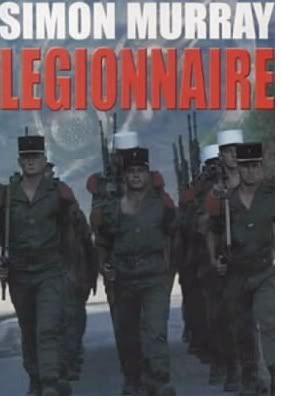
THERE ARE times in a book reader's life when he's browsing the shelves of books in a bookshop and pulls out one with an attractive title or cover.
He then proceeds to read the synopsis. The brief description so gripped him that he just has to buy it, and he does. That was what happened to me several weeks ago.
The book is entitled Legionnaire and the writer is an English gentleman named Simon Murray. Back about 40 years ago when Simon was a young, restless lad from one of the districts of England, he felt the need to prove something to himself.
On an irresistible impulse, he literally marched off to the recruitment office and signed up with the French Foreign Legionnaires. To say that he was foolhardy would be quite appropriate. But then, he was just 19 years old at that time. It was hardly an age of wisdom.
Life wasn't that exciting for him at that time, and he was really up to the challenge or so he thought. Before he knew it, he was off and running, again literally.
Soon he found himself in the company of some of the roughest, toughest guys in Europe. A number of them had shady backgrounds but the Legionnaire club didn't care. If you survive their training and obstacle courses, you will be put to good use, all for the greater glory of the French republic.
If you didn't make it, you will end up as another statistic, and nobody will be the wiser because it was presumed that you were "unwanted and uncared for" in your part of the world anyway.
Simon Murray spent five very long years with the Legionnaires. He had an unforgettable taste of Paris, Marseilles, Algiers and the North African desert. The surprise outcome was not he survived his 60-month stint with the hardcore soldiers but he actually made it out alive and in fairly good shape, too.
Numerous candidates who joined at about the same time as him, perished in more dire circumstances with almost nobody to mourn for them. That is the way of the legionnaire. You joined, you trained, you fought and you overcome.
If you didn't, the corps will bury you somewhere convenient. There was no fuss or muss about where you die. You just die but you were collateral damage. And it was war, Legionnaire-style. That means, you come face to face with Death on many occasions until you two become so familiar, you shake hands after numerous encounters.
Simon relates in graphic details all the trauma he and others experienced in the long trek towards "graduation". Along the way, they party hard, sleep wherever they could. Often, they fell asleep in dirty clothes, caked with mud, sweat and tears.
It wasn't a good life. It was actually hell. That was why whenever they had an opportunity to party, they lived it up.
Tomorrow was just another moment for them. Some of them didn't make it to tomorrow. Everyday seemed a long way from tomorrow.
Some of the training methods were brutal. The trainers were merciless. Not all, of course. But those trainers who were lacking in compassion seemed to harbour a sadistic streak to see the recruits suffer for a long time.
Broken limbs were common. Broken heads were part of the training and extreme fatigue was par for the course.
Fortunately, for the rest of the world, Simon Murray kept a diary when he was with the Legionnaires. He recorded every single bit of unhappiness and moment of hilarity and insanity that dropped on his path.
He named every single commanding officer who blocked his way or gleefully turned his life upside down. However, not all was a nightmare. He made some good friends and they kept in touch for life.
Legionnaire is one of the most arresting reads I have ever experienced. Most men my age would be happy potting around in the garden. Our greatest moment of physical excitement would probably be to watching the final of a football game.
For Simon Murray, he went to the ends of the earth to taste life at its most extreme. Shedding blood, his own, was part of the Legionnaire ritual. He learnt French in a hurry. He became proficient in it and also excelled in parachuting.
He earned his stripes and the honours didn't come easy. Simon's superiors recognised the latent talents of the young Englishman. They groomed him to become an officer.
In the end, he was discharged with flying colours. The last few chapters of this book proved to be the most poignant. He related the years after he left the French Foreign Legion. He went from soldier to corporate figure.
He was lucky. In fact, he was more fortunate than so many others who joined the force with him. Decades later, he bumped into some of his old soldier friends and they relived those Legionnaire days.
They cried even as they hugged each other. They remembered fondly the French songs they had sung and re-sang in celebration of the old days in Algiers and elsewhere.
Some of those shoot-and-be-damned moments could not be erased from memory. Simon Murray relishes in all of them. He tells fondly of two good Legionnaire friends who returned from abroad to surprise and to celebrate with him his 50th birthday.
That episode brought tears even to myself. It was one of those male bonding moments that some men know of.
I truly enjoyed walking down the paths which Simon Murray had trodden on. Even though it was only in my mind, the adventures that became part of his life and formed his character, became part of mine as well in other ways.
Simon Murray has no regrets, as he says. He is proud that he seized the moment and along the way, made lifelong friends that added the special flavour to make a life uncompleted so wonderful.
I would certainly recommend any man of any age to read Legionnaire. It is a magnificent testament of one man's daring adventure at an age when all young men are called to the test. Simon Murray took up the gauntlet and survived, and became the better of it.
Saturday, June 24, 2006
The Heavenly Man by Brother Yun and Paul Hattaway
I JUST read this book about three days ago. It so happened that my brother-in-law returned home from New Zealand after an absence of five years.
Soon after his arrival, he dropped The Heavenly Man on my table and said: "You should read this. It is the story of a remarkable man of God who encountered miracles in his journey to find the Lord."
I put the book aside for a few days until one fine day, the thought of reading it wouldn't leave me alone. I went to find the book but it was not on the table, so I went to my brother-in-law's room. I found it on his bed.
One of the first things I noticed about the book was the blurb on its cover that states that it is Book of the Year (as designated by some Christian association). I normally shy away from reading such evangelical material because normally by the first chapter, I would be inundated by sayings from the Bible and all sorts of "Praise the Lord" references.
I really don't mind being exposed to Christian literature but too much of it in one sitting can be not only a trying affair, it can also be a tiring one. Anyway, on impulse I began to digest its contents.
By the first chapter, I was glad that it is written as a story instead of sounding like a sermon from the pulpit. My guess is the Brother Yun had written it originally in Mandarin and Paul Hattaway translated it into English. The Lord does work in not-so-mysterious ways.
China, as we all know, is still very much a pagan country and I don't mean it in a disparaging sense. It simply is, as I say, a country of Gentiles. China has a long association with Taoism and Buddhism. I really have nothing bad to say about these two beliefs. I think they have fine set of principles and teachings.
However, Brother Yun is certainly one of the most determined Christians I have ever come across. He talks about his initial problems with Christianity and how he doggedly followed the path of righteousness until his journey became clear.
But before heaven could open its gates to Brother Yun, he had to walk into the heart of hell and through it. Prison subsequently became his second home and torture was part of his life.
To read a man's history about the series of torture sessions and the suffering he had to endure before the light of heaven falls onto his path can be an education by itself.
Throughout his long ordeal, Brother Yun hardly faltered. Yes, he had his doubts. There were times when his faith was shaken. There were moments when he questioned God's presence but ultimately he stayed true to his faith. And the outcome was, the truth truly set him free.
The Heavenly Man is for those who have doubts about their Christian faith. It is written to comfort and console all those who are facing challenges in their quest to spread the teachings of Christ.
Somehow I feel the book was written with the aim of telling others who are in the same predicament this message: Don't give up, no matter what. The long may be long for some but God never abandons the faithful and everything seemingly bad always happens for a good reason.
This book is not only written by a Christian for the Christians, it is also inspired and distributed for the benefit of those who are searching for answers. It serves to tell the confused, the meek and the cowardly that if they pray and have faith everlasting, everything that they ask for and pray for, in the end shall be theirs.
Brother Yun has written a most satisfying and inspiring account of his own life. Astounding because its seeds were sown in a country that does not give much space for religion of any kind.
Perhaps with Brother Yun's book, the words and prophecy may be played out eventually. That China will "be the hope of the world."
Friday, May 26, 2006
Touched by Angels by Eileen Elias Freeman
FOR a long time I have believed in guardian angels but I haven't really gone "over to the other side" to get confirmation, until I came across this book and read it.
It's reassuring to know that I am the "oddball who believes in angels". There are many who have actually experienced having encounters with these heavenly beings.
Once we have learnt to accept this fact, our lives become less stressful. We know if ever we experience difficulties, we can always seek the help of our guardian angel who is ready to help.
Remember, in the domain of angels, time is not a factor. You may have aged from 8 to 80 in one short breath but to the angel, you remain the same yesterday, today and tomorrow.
In Freeman's books, she relates accounts of those people whose lives have changed for the better because they have had undergone life-altering experiences with entities that don't seem to belong to our dimension.
In the realm of angels or rather when they do appear to us, most of us would hardly recognise them because they look and behave the same as an ordinary person. It is only when the angel has left our sight that we suddenly regain our composure and begin to question the kind deeds and presence of this "strange person".
I have a personal encounter of what I believe even up till today of the celestial kind. This book reminded me of that incident which took place several years ago.
One day after work, I decided to go home because I had finished work early. It was around 7pm or 8pm. I normally finished work around 10.30pm, so I was pretty glad that it was a good day for me.
As I scooted home, I thought I heard a clanking sound coming from the engine compartment of my motorcycle. I ignored it because I thought the chain was loose. Within a few minutes, the irritating sound became louder and I finally realised that the motorcycle is no longer moving on its own power.
I stopped the bike along the shoulder of a very busy road and discovered that the motorcycle chain has come off. I pulled my bike onto the road shoulder and started to attempt a weak repair work.
The hours slipped by when I was trying to re-insert the bike's chain into the proper sockets. All the time, I was praying the good God should help me with this situation.
After about one and a half hours of futile attempts at repairing the chain problem, I was getting a bit desperate. That's I was preparing for a long walk home and pushing the bike all the way. Meanwhile, I was praying like it would be the end of the world tomorrow.
By 10.30pm, I was becoming desperate. I earnestly called on my guardian angel to do something. Before long, I heard the sound of an oncoming bike. It was travelling on the five-foot way, heading in my direction.
It was a young man with a very pleasant personality. He stopped and asked me what was wrong. I told him I have been trying to put the loose chain back into the sprocket.
I quickly asked him if he knew how to repair bikes. He said no but he said he would keep me company. Just then, he said he would lend me a hand in turning the wheel while I was slipping the chain back into its grooves.
I have tried that technique for hours but no to avail. So I thought I would give it a shot. He held the wheel and gave it a slight tug while I was grabbing the chain and trying to put in the chain again.
This time, the chain went in like grease lightning. It was as if the difficulty was nothing in the first place. I was pleased as punch. He bade me goodbye and went on his way after he knew that I was out of the loop.
It was only when I went home that I realised that it was a rather odd incident because normally motorcyclists do not go by the main road from the opposite side. This chap actually was travelling on the Motorists' right of way.
His behaviour also went against the city slickers' nature. They almost never stop and help anyone expecially at night. This young guy however just appeared out of nowhere and travelled to my destination.
Touched by Angels gives excellent accounts of people who were at the crossroads of their lives when they encountered the angels. And each person who has that special experience went on to become better people after those experiences.
This book is very hard to put down once you have started reading it. I am glad that the angels are working their best to help mankind and the task of helping as many people as possible has widened to many lands.
Occurrences are increasing in numbers and all holy encounters have helped bring hope and joy to all those who have experienced their own special angel meetings.
I love reading this book. It is a big source of inspiration and it renews the faith in the reader to understand the dimension that is not ours to go into, and even at this point to understand.
If you are troubled, sick and depressed, read Touched by Angels, so that you also can be part of the angel network that brings you closer to heaven and further away from personal fears and loneliness.
The underlying message in cases like these is that people always will gravitate towards kinds, compassion and love, and angels have all three qualities in full abundance.
Wednesday, April 19, 2006
The Tao of Physics by Fritjof Capra
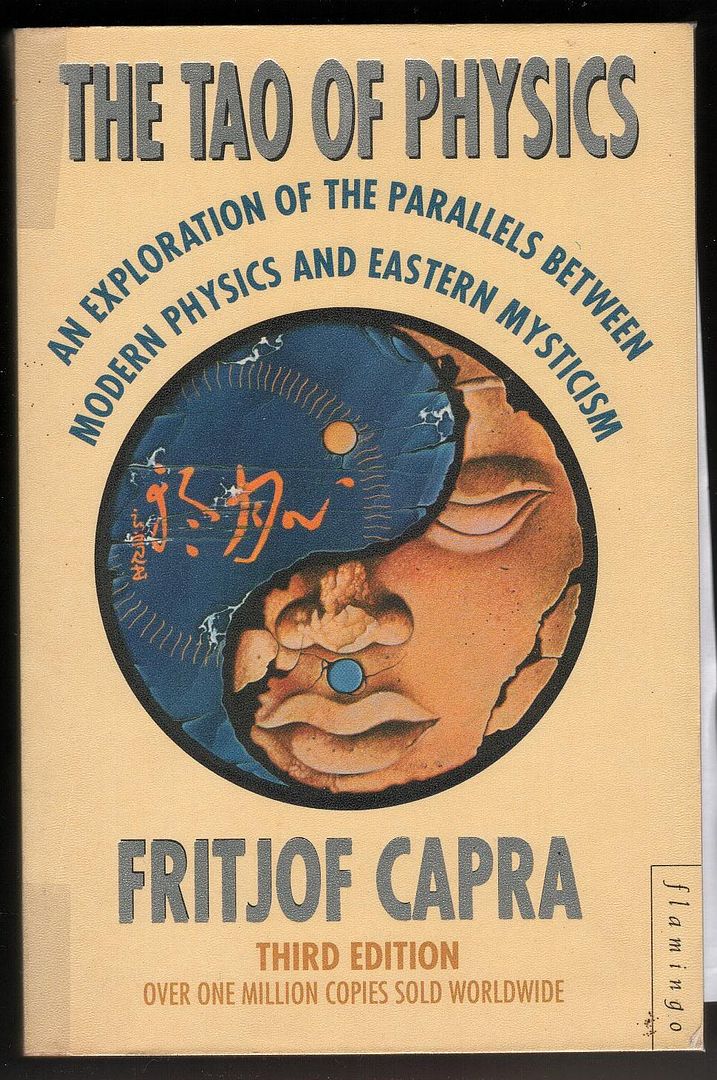
SOME of us who have delved into various aspects of Eastern mysticism have long suspected that everything is somehow interconnected.
About 30 years ago, a young man by the name of Fritjof Capra experienced a sudden revelation, as he called it, and burst into tears.
Prior to this life-altering experience, he had spent years in analytical thinking.
This book is the result of his personal exploration of the parallels between Eastern mysticism and modern physics.
Capra holds a PhD in theoretical physics and has carried out extensive research into high energy physics at various universities in Europe and America.
Yet this is not a book that will befuddle students of the liberal arts; rather, it will open vistas of knowledge that encompass the ancient world of the East and the modern realm called "new physics".
Capra takes a slow walk along the paths of Hinduism, Buddhism and Taoism. He unravels the connection between the enlightenment, the ultimate achievement of the East and the rational knowledge of modern science.
Those from the East probably won't react with astounding surprise at the pervasive harmony that connects the universe. However, when Capra published this book in 1976, people in the West were astonished by the young scientist's revelations.
He talks about the unity of all things that does not seem to be alien to the holy men of the East. The ultimate reality of the cosmic whole, according to Capra, is the oneness of all there is.
This concept is known by numerous names in different religions; the Hindus name it Brahman, the Buddhists call it Dharmakaya and the Taoists proclaim it as Tao.
The Tao of Physics is an exercise in fascination and wonderment.
The quantum theory postulates that "the universe is not a collection of physical objects but a complicated web of relations between parts of a unified whole". In simple terms, we are all one.
Being a man of science, the writer explains quite rationally the avenue
that lies beyond the world of opposites.
Of course, there are passages between the covers when discussion of a
scientific topic becomes somehow out of reach to those from the arts.
The intent is understood and Capra's attempts at simplified explanations are
successful in shedding light on obscure concepts. This book moves from the subatomic world of particles to the Dance of Shiva in Hinduism.
Along the way, Capra draws the parallelism that has existed for time immemorial except that man, for eons, has been unable to understand the symmetry of the worlds foreseen by our wise forefathers of different colour and creed.
The Tao of Physics is still a popular read in many higher institutions of learning around the world. The thesis put forth by Fritjof Capra in his seminal work holds true today as it did three decades ago.
For those who have made it their lifelong quest to achieve a deep understanding of the East and the West, this book is a fountain of surprises It is also an oasis of information for seekers of knowledge, ancient and modern.
The Story of My Life by Helen Keller
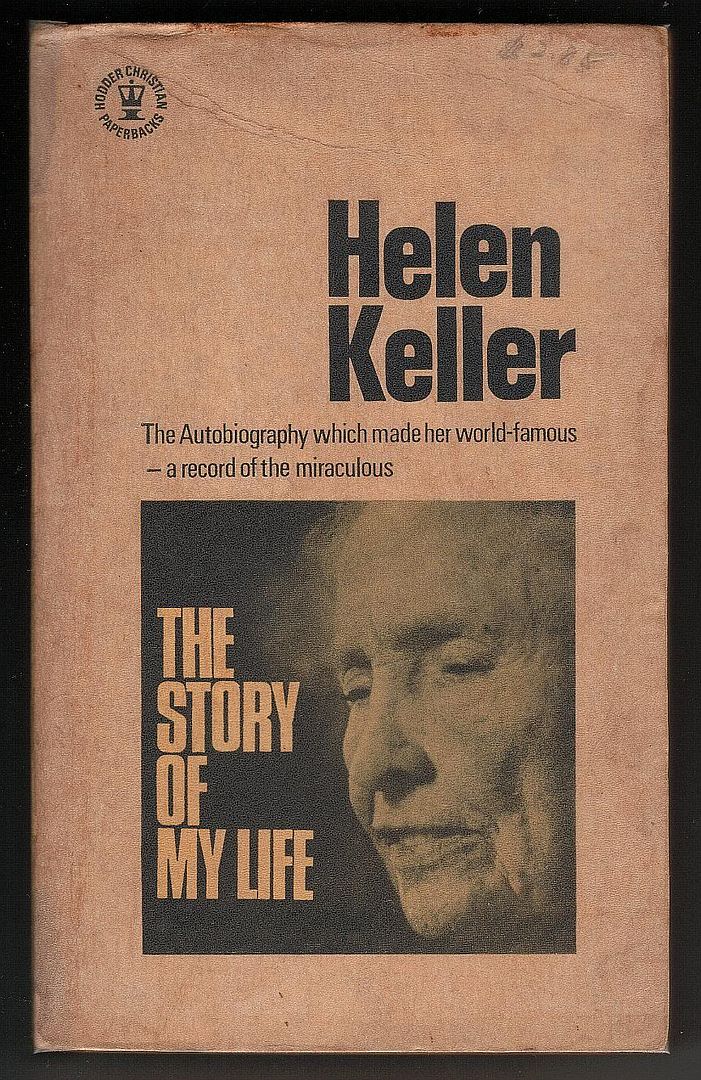
HELEN Keller is probably the most famous deaf-and-blind person of all time. Born in 1880, her world of sight and sound came to an abrupt end when she was 19 months old. For nearly seven years thereafter, Keller existed in a world of silence and total darkness - a fate unimaginable by most of us.
In that initial long, dark tunnel travelled by Keller, there was to be a shining light and it came in the form of Anne Mansfield Sullivan, Keller's beloved teacher. The meeting of the teacher and the pupil was a rendezvous arranged by destiny. It was an encounter that simply could not be avoided.
Anne Sullivan, herself partially blind, was also born into a life of despair and neglect. That she had survived and overcome the great odds made her a most suitable teacher for her young ward.
It took three years before Helen Keller learned to speak. This is a tale of a magnificent journey undertaken with great love and care. It is also about hope,
courage and an unshakeable faith in the human ability to live the best one can under abnormal circumstances.
Helen Keller's story should be read slowly. The pace must be unhurried and the heart at peace with itself. Keller has many valuable lessons for each one of us who has taken for granted all our natural gifts.
The book also contains letters written by Keller to people who met and befriended
her. These are illuminating and insightful, revealing a person who had found strength in her own ability to walk confidently among others endowed with physical attributes superior to hers.
Despite all her handicaps, Keller forged ahead to fulfil her own immense
potential as evident later in her adult life. Her personal story inspired
generations of individuals similarly born blind and deaf to follow in her
footsteps with steadfast confidence.
This is Keller's greatest contribution to society. To all those who suffered physical handicaps, she gave hope. To all those born into a soundless world, she gave encouragement. And to the rest who are blessed with normal functions, she taught us humility, compassion and love.
Helen Keller walked through this world at a time when it was in dire need of a human beacon of hope and joy. It must surely be one of man's greatest lessons to find out that one of the greatest among his kind was a woman who was born with some of life's greatest disadvantages.
This book is a sterling reminder that the rest of us have no cause to complain about life being unfair to us at any stage of our lives.
Helen Keller's story is one of the greatest autobiographies ever published. For her to be able to tell it with a happy ending makes it a treasure to be savoured.
Thursday, February 23, 2006
Jawaharlal Nehru - An Autobiography
WHEN a learned person is imprisoned for his ideological beliefs, he has all the time in the world to reflect on his life, especially on events leading to his predicament.
By the time Jawaharlal Nehru found his true calling in life, he had been in and out of prison so many times that he almost treated the jail as his second home.
The once-future Prime Minister of India spent many months during one of his numerous jail terms in then British-controlled India writing this autobiography. The mood that emerges from this 623-page book is almost melancholic.
Born in the latter half of the 19th century and the only son of wealthy barrister Motilal Nehru, Jawaharlal was a descendant of the Kashmiri clan and a member of the Brahmin caste.
Even though Nehru modestly recounts his early education at England's Harrow and Cambridge University, the book impresses upon the reader that Nehru felt that he was indeed one of the few lucky ones amid the impoverished millions back home. Understandably, the major portion of the autobiography evolves around his political struggles and the effects of the accumulated years of incarceration on his family.
He shares his thoughts on Mahatma Gandhi with admirable candour. He discloses his doubts about the great Indian leader at certain junctures when Gandhi made decisions that did not seem to coincide with practical objectives.
This reflection and confession of thoughts and deeds cover a wide spectrum of Nehru's early checkered political career when he had to bear great physical discomfort and endure much personal hardship.
If the great Mahatma was the soul of India, then surely Nehru must be her conscience. It takes a man of great character to bare his heart and soul to the nation and the world, to expose his weaknesses and doubts about his own political beliefs and physical limitations. Yes, there were times when the beatings became so severe that even the steely resolve that was part of the Nehru persona began to buckle.
During the 1920s and early '30s, India was caught up in a massive, inexorable wave of nationalism. Nehru walked among the masses as one of the few leaders revered by people from all strata of society. He ate their food, stayed in their hovels and wore the kurta (local native attire) to drive home the message that he was there with them in spirit and in person.
For his courage of conviction and compassion for the people he had chosen to lead, the name Nehru was spoken with great reverence among the common folk, even till today. India should be proud that in her history there once strode a man named Jawaharlal Nehru.
If one desires to understand India, her people, and history, this book will serve as a great introduction. A study of India cannot be complete without learning about
Nehru the politician, the husband, the son and the voice of the Indian masses.
While this is not light reading, those who dare to walk along side with Nehru as he trudges down the long and winding path he once took will find the rewards enormously satisfying.
By the time Jawaharlal Nehru found his true calling in life, he had been in and out of prison so many times that he almost treated the jail as his second home.
The once-future Prime Minister of India spent many months during one of his numerous jail terms in then British-controlled India writing this autobiography. The mood that emerges from this 623-page book is almost melancholic.
Born in the latter half of the 19th century and the only son of wealthy barrister Motilal Nehru, Jawaharlal was a descendant of the Kashmiri clan and a member of the Brahmin caste.
Even though Nehru modestly recounts his early education at England's Harrow and Cambridge University, the book impresses upon the reader that Nehru felt that he was indeed one of the few lucky ones amid the impoverished millions back home. Understandably, the major portion of the autobiography evolves around his political struggles and the effects of the accumulated years of incarceration on his family.
He shares his thoughts on Mahatma Gandhi with admirable candour. He discloses his doubts about the great Indian leader at certain junctures when Gandhi made decisions that did not seem to coincide with practical objectives.
This reflection and confession of thoughts and deeds cover a wide spectrum of Nehru's early checkered political career when he had to bear great physical discomfort and endure much personal hardship.
If the great Mahatma was the soul of India, then surely Nehru must be her conscience. It takes a man of great character to bare his heart and soul to the nation and the world, to expose his weaknesses and doubts about his own political beliefs and physical limitations. Yes, there were times when the beatings became so severe that even the steely resolve that was part of the Nehru persona began to buckle.
During the 1920s and early '30s, India was caught up in a massive, inexorable wave of nationalism. Nehru walked among the masses as one of the few leaders revered by people from all strata of society. He ate their food, stayed in their hovels and wore the kurta (local native attire) to drive home the message that he was there with them in spirit and in person.
For his courage of conviction and compassion for the people he had chosen to lead, the name Nehru was spoken with great reverence among the common folk, even till today. India should be proud that in her history there once strode a man named Jawaharlal Nehru.
If one desires to understand India, her people, and history, this book will serve as a great introduction. A study of India cannot be complete without learning about
Nehru the politician, the husband, the son and the voice of the Indian masses.
While this is not light reading, those who dare to walk along side with Nehru as he trudges down the long and winding path he once took will find the rewards enormously satisfying.
A Course In Miracles - by Helen Schucman
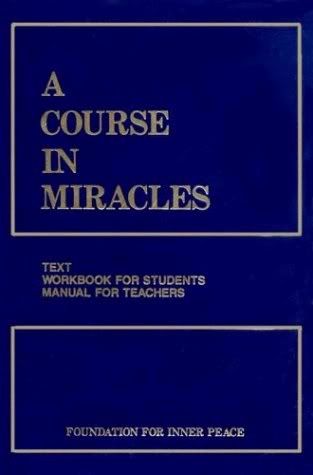
IF YOU are faced with a choice of reading only one book for the rest of your life, let it be this one. A Course In Miracles (ACIM) is certainly the most amazing book I have read in my entire life.
It is actually a three-in-one book. The fi rst volume is the Text; the second is Workbook for Students and the third, Manual for Teachers.
Originally, it was published separately in three parts, but ACIM - as it is generally called - has now been merged into one book.
This book was birthed under unusual circumstances. The writer is Helen Schucman, a research psychologist as well as an associate professor of medical psychology. Schucman referred to herself as the "scribe".
Schucman had made public that the writing in this book was through inner dictation. She said she was aided in the process by Dr William Thetford, who was a professor of medical psychology.
ACIM is a comprehensive self-study spiritual-thought system. It does not impose any special conditions on the part of the reader except a willingness to partake in its lessons.
In its introduction, it says: "This is a course in miracles. It is a required course. Only the time you take it is voluntary. Free will does not mean that you can establish the curriculum. It means only that you can elect what you want to take at a given time.
The course does not aim at
teaching the meaning of love, for that is beyond what can be taught. It does aim, however, at removing the blocks to the awareness of love's presence, which is your natural inheritance. The opposite of love is fear, but what is allencompassing can have no opposite." Even though this book is all about spirituality, the writer herself is a self-professed atheist.
Schucman said: "I do not believe what has been written but I do know the principles work." A strange statement about an otherwise astounding book.
ACIM was published in 1975 and has since been translated into nine other languages with another 11 in the translation process.
This book alters a person's perception of life in general. It teaches you to "see" beyond what is before your eyes. It makes you understand the link of all that exists and what can never die. The whole message of ACIM can be distilled into just a few lines. They are: "Nothing real can be threatened.
Nothing unreal exists. Herein lies the peace of God." ACIM changes your life if you allow it to. It alters an individual's sense of perception and transports you to another level of consciousness. If you have the discipline to follow the 365 lessons in the Workbook for Students, it will clear your mind, unlock your heart and free your soul to wander to its real home.
In its 30 years of existence, it has spread its message and lessons across the world. This book cannot be found in bookshops. It can only be obtained from its source, the Foundation For Inner Peace, through the Internet.
Thinking About The Unthinkable by Herman Kahn
HERMAN Kahn was a military strategist who played war games in the borderless battlefi eld of his mind. Noted to be one of the most brilliant minds of the 20th century, Kahn was an employee of the Rand Corporation in America in the volatile `50s and the rocking `60s.
It has been noted that Herman Kahn had no experience in actual warfare but his contributions as a systems theorist and military strategist at Rand thrust him onto the forefront of the Cold War between the Soviet Union and US in the 1950s and 1960s. Kahn's seminal work on thinking about the unthinkable had probably helped shape America's nuclear strategy for the next two generations.
Kahn was the only strategist at that time who dared to examine the brutal realities of a world gone mad. Thus was born the well-known doctrine of Mutual Assured Destruction or MAD. Kahn was also responsible for bringing to the world's attention, phrases like "overkill", and "massive retaliation".
Kahn had earlier gained prominence when he published an earlier work entitled On Thermonuclear War in 1961. That laid the groundwork for Thinking About The Unthinkable in 1962. This book is all about the
shocking possibilities and counter-measures if a nuclear war were to took place between USSR and the US. Kahn's argument for engaging in mental analysis of an extremely daunting subject was that "it wasn't immoral to think about these things; on the contrary - planning for nuclear contingencies in the event deterrence fails is the only responsible, prudent and moral cause".
To help readers and his detractors to emotionally comprehend the concepts of thermonuclear war, Kahn used anecdotal illustrations and "Gedanken" experiments. Gedanken is German for "thought", and a Gedanken experiment is an analytical tool in physics and philosophy. Its aim is to argue to a satisfying conclusion all the potential consequences of an intended experiment in accordance with the laws of nature, in this case, nuclear war.
Thinking About The Unthinkable is for those who want to know the outbreak scenario, earth shock, environmental problems, genetic effects, medical aftereffects and social and political changes concerning nuclear war.
Even though the grim subject and its related topics are unpalatable for most ordinary citizens, Kahn's thoughts and their relation to global political stability in the 21st century cannot be underestimated. A discussion of mass extermination of the human race is not exactly breakfast fodder, but it is definitely food for thought in the context of present political circumstances in parts of the Middle East and Asia in present day.
If mankind were to avert such an outcome or even to think of eliminating the factors that could lead to such a horrific situation, it is prudent that man must cultivate a deep understanding of the complete scenario. Herman Kahn has clearly provided us with some vital tools that would help in defusing such an explosive issue.
The Importance of Living by Lin Yu-tang
PUBLISHED in 1937, this book has found its way into the private libraries of book readers and collectors who consider this tome by Professor Lin Yutang as one of the most enlightening ever published before World War II.
It expounds the simple joys of living that are constantly overlooked by many of us. The answers to peace of mind and to live with a perpetual smile are found in the classic Chinese philosophy of looking for the extraordinary in the ordinary.
Lin has an easy way with English which he uses to communicates his philosophy of life with great finesse. With most books that touch on any philosophy of the gentler kind, understanding of the subject by the reader is crucial.
Lin's clarity of ideas is done with humour that is very much part of his persona. Thus, in a relaxed and easy manner, his ideas seem most logical and agreeable even to the most cynical among us. The writer was born on October 19, 1895, in Fujian, southeastern China. He obtained his bachelor's degree at the St. John's University in Shanghai. His academic excellence earned him a partial scholarship for a PhD programme at Harvard University.
However, he didn't complete his stay at Harvard and moved on to France and later Germany. It was in Germany where he completed his PhD course. Lin then went on to teach English literature at Peking University.
Lin Yutang's childhood memories of his mountainous hometown remained with him his entire life. Much of what he loved about country living was reflected in The Importance of Living.
Metaphorically, this book is like walking on the beach early in the morning and witnessing the splendour of dawn as light peeks over the distant mountain top. Lin has a knack of reminding us of what's really important in life.
Some of the most pleasurable and greatest moments of an individual's life are found in simple activities like hearing the rustling of the wind through the trees, or watching the rain sweeping gently across the land.
This book and his earlier work, My Country My People (1935), established Lin's reputation around the world. Lin once remarked that he was a man whose feet were firmly planted on the East while his head hovered in the West.
Throughout his life, one of his chief aims was to build a bridge over the cultural chasm between the West and the East. His fame stretched beyond the borders of his homeland and lasted longer than his lifespan of 81 years.
The following quotation from The Importance of Living reflects Lin's understanding of life and his countrymen: "One can learn such a lot and enjoy such a lot in 70 years, and three generations is a long, long time to see human follies and acquire human wisdom. Anyone who is wise and has lived long enough to witness the changes of fashion and morals and politics through the rise and fall of three generations should be perfectly satisfied to rise from his seat and go away saying `It was a
good show,' when the curtain falls."
A reader of this book will have the same feeling when he finishes it.
It expounds the simple joys of living that are constantly overlooked by many of us. The answers to peace of mind and to live with a perpetual smile are found in the classic Chinese philosophy of looking for the extraordinary in the ordinary.
Lin has an easy way with English which he uses to communicates his philosophy of life with great finesse. With most books that touch on any philosophy of the gentler kind, understanding of the subject by the reader is crucial.
Lin's clarity of ideas is done with humour that is very much part of his persona. Thus, in a relaxed and easy manner, his ideas seem most logical and agreeable even to the most cynical among us. The writer was born on October 19, 1895, in Fujian, southeastern China. He obtained his bachelor's degree at the St. John's University in Shanghai. His academic excellence earned him a partial scholarship for a PhD programme at Harvard University.
However, he didn't complete his stay at Harvard and moved on to France and later Germany. It was in Germany where he completed his PhD course. Lin then went on to teach English literature at Peking University.
Lin Yutang's childhood memories of his mountainous hometown remained with him his entire life. Much of what he loved about country living was reflected in The Importance of Living.
Metaphorically, this book is like walking on the beach early in the morning and witnessing the splendour of dawn as light peeks over the distant mountain top. Lin has a knack of reminding us of what's really important in life.
Some of the most pleasurable and greatest moments of an individual's life are found in simple activities like hearing the rustling of the wind through the trees, or watching the rain sweeping gently across the land.
This book and his earlier work, My Country My People (1935), established Lin's reputation around the world. Lin once remarked that he was a man whose feet were firmly planted on the East while his head hovered in the West.
Throughout his life, one of his chief aims was to build a bridge over the cultural chasm between the West and the East. His fame stretched beyond the borders of his homeland and lasted longer than his lifespan of 81 years.
The following quotation from The Importance of Living reflects Lin's understanding of life and his countrymen: "One can learn such a lot and enjoy such a lot in 70 years, and three generations is a long, long time to see human follies and acquire human wisdom. Anyone who is wise and has lived long enough to witness the changes of fashion and morals and politics through the rise and fall of three generations should be perfectly satisfied to rise from his seat and go away saying `It was a
good show,' when the curtain falls."
A reader of this book will have the same feeling when he finishes it.
Monday, January 23, 2006
The Railway Man by Eric Lomax
PUBLISHER: BALLANTINE BOOKS
PRICE: RM48
SOME books leave readers with a feeling of exhilaration at its
conclusion. Other books inspire, encourage, motivate or even frighten
readers.
Then there are books that leave their readers in tears, and The Railway
Man is one such book. It is about a young Englishman who found himself in
Malaya just before the outbreak of the Second World War. His experiences
as a soldier and then as a prisoner of war in Malaya, Singapore and
Thailand left psychological scars so deep that it took almost half a
century to heal.
Eric Lomax's gut-wrenching story was written as a balm to heal his own
soul. Lomax was one of the tens of thousands of British and Australian
soldiers who found themselves living out the war years behind barbed wire.
In Lomax's case, his PoW experiences led him to work on the infamous
Burma-Siam Railway and then sent him straight to hell. The Death Railway
as it was called was responsible for the deaths of thousands of war
prisoners. The writer's survival from such an ordeal is in itself a
miracle. But the core of Lomax's horrifying wartime experiences is the
almost unbelievable torture by the Japanese Kempeitai. Beaten by the
Japanese military with pick-axe handles for hours until his arms and hips
were broken, Lomax miraculously survived, only to be later subjected to
several rounds of water torture. In the midst of all that unimaginable
pain, Lomax was denied the luxury of death.
He recounted that two of his army friends were also beaten in much the
same way. Their mangled bodies were left out in the hot sun for days.
Somehow they survived, much to the surprise of their torturers. However,
most of them eventually died but not Lomax, who returned to England, got
married shortly afterwards and settled down to a mundane career. But the
hell from which he escaped followed him. Decades later, he would wake up
in the middle of the night screaming. Each time, reliving the agonies of
prison torture and visions of friends dying horrible deaths.
Wondrously, this book is not about retribution but about forgiveness and
courage. Decades later when most of the world have forgotten about the
war, Lomax carried with him the image of one man who came to symbolise the
cruelty of the enemy. The enemy was Nagase Takashi, the interpreter who
was assigned to the Kanburi prison camp where Lomax was held. Lomax hated
his tormentor with a bitterness that turned him into a walking shadow of
fear and self-doubt.
Nagase was the enemy who was constantly in Lomax's presence when he was
questioned and tortured. Call it a miracle of fate, but the two men
emerged from the war, physically intact but victims of painful memories.
In his unbridled account of his PoW experiences, Eric Lomax has
unchained himself from a lifetime of pain, sorrow, misery and nightmares.
This book is as much about the healing power of forgiveness as it is about
the miracles of compassion and love. It is one of the most heart-rending
accounts of wartime experiences that I have ever read. It has blessed the
writer for finding the courage to bare his soul, thus making him whole and
it also blesses the reader who learns that forgiveness is the key to peace
of mind.
PRICE: RM48
SOME books leave readers with a feeling of exhilaration at its
conclusion. Other books inspire, encourage, motivate or even frighten
readers.
Then there are books that leave their readers in tears, and The Railway
Man is one such book. It is about a young Englishman who found himself in
Malaya just before the outbreak of the Second World War. His experiences
as a soldier and then as a prisoner of war in Malaya, Singapore and
Thailand left psychological scars so deep that it took almost half a
century to heal.
Eric Lomax's gut-wrenching story was written as a balm to heal his own
soul. Lomax was one of the tens of thousands of British and Australian
soldiers who found themselves living out the war years behind barbed wire.
In Lomax's case, his PoW experiences led him to work on the infamous
Burma-Siam Railway and then sent him straight to hell. The Death Railway
as it was called was responsible for the deaths of thousands of war
prisoners. The writer's survival from such an ordeal is in itself a
miracle. But the core of Lomax's horrifying wartime experiences is the
almost unbelievable torture by the Japanese Kempeitai. Beaten by the
Japanese military with pick-axe handles for hours until his arms and hips
were broken, Lomax miraculously survived, only to be later subjected to
several rounds of water torture. In the midst of all that unimaginable
pain, Lomax was denied the luxury of death.
He recounted that two of his army friends were also beaten in much the
same way. Their mangled bodies were left out in the hot sun for days.
Somehow they survived, much to the surprise of their torturers. However,
most of them eventually died but not Lomax, who returned to England, got
married shortly afterwards and settled down to a mundane career. But the
hell from which he escaped followed him. Decades later, he would wake up
in the middle of the night screaming. Each time, reliving the agonies of
prison torture and visions of friends dying horrible deaths.
Wondrously, this book is not about retribution but about forgiveness and
courage. Decades later when most of the world have forgotten about the
war, Lomax carried with him the image of one man who came to symbolise the
cruelty of the enemy. The enemy was Nagase Takashi, the interpreter who
was assigned to the Kanburi prison camp where Lomax was held. Lomax hated
his tormentor with a bitterness that turned him into a walking shadow of
fear and self-doubt.
Nagase was the enemy who was constantly in Lomax's presence when he was
questioned and tortured. Call it a miracle of fate, but the two men
emerged from the war, physically intact but victims of painful memories.
In his unbridled account of his PoW experiences, Eric Lomax has
unchained himself from a lifetime of pain, sorrow, misery and nightmares.
This book is as much about the healing power of forgiveness as it is about
the miracles of compassion and love. It is one of the most heart-rending
accounts of wartime experiences that I have ever read. It has blessed the
writer for finding the courage to bare his soul, thus making him whole and
it also blesses the reader who learns that forgiveness is the key to peace
of mind.
Subscribe to:
Posts (Atom)
